
Medically reviewed by the clinical team at Bin Haider Healthcare Center (BHHC), a DHA-licensed dermatology and aesthetic facility in Barsha Heights, Dubai operating under Dr. Hessa Bin Haider’s medical supervision, with 20+ years of combined clinical experience and 4.9/5 across 312 Google reviews.
Forehead lines are one of the most common reasons patients walk into an aesthetic clinic in Dubai, and the facility they choose matters almost as much as the treatment itself. Equipment standards, staff credentialing, and continuity of care all shape the final result. Understanding botox for forehead lines means understanding not just how the treatment works, but what a properly licensed, multi-specialty facility can offer that a smaller, single-practitioner setup often can’t. This guide covers the science behind forehead wrinkle treatment, what real results look like, and what to expect from consultation through aftercare at a DHA-licensed center like BHHC.
What Causes Forehead Lines?
Forehead lines form through a combination of repeated muscle movement and the skin’s gradual loss of structural support, and understanding both halves of that process is the first step toward treating them effectively.
The Frontalis Muscle and Repeated Expression
The frontalis is a vertical muscle that runs across the forehead, and it’s the primary muscle responsible for raising the eyebrows. Every time you look surprised, squint against bright light, or simply raise your brows out of habit, the frontalis contracts and the skin above it folds. Over years of repetition, these temporary folds gradually become visible even at rest, forming the horizontal lines most patients come in asking about.
Collagen Loss, Aging, and Dubai’s Climate
Muscle movement alone doesn’t fully explain why forehead lines deepen with age. Collagen and elastin production naturally decline from the mid-twenties onward, reducing the skin’s ability to bounce back after each muscle contraction. In Dubai specifically, near-constant sun exposure accelerates collagen breakdown faster than in more temperate climates, which is one reason forehead lines often appear earlier in patients living in this region compared to global averages.
Tip: Lines that only appear when you raise your eyebrows, not when your face is at rest, tend to respond best to early or preventive treatment, before they become etched into the skin permanently.
How Botox for Forehead Lines Works
Botox for forehead lines works by temporarily blocking the nerve signal that tells the frontalis muscle to contract, and its regulatory history is part of what makes it one of the most extensively studied treatments in aesthetic medicine.
Mechanism: Blocking Acetylcholine at the Neuromuscular Junction
Botox is a purified form of botulinum toxin type A. When injected into the frontalis, it blocks the release of acetylcholine, the neurotransmitter responsible for triggering muscle contraction, at the point where nerve meets muscle. Without that signal, the frontalis contracts with far less force, so the skin above it stops folding into the same deep lines with each expression. The muscle itself isn’t damaged, which is why the effect is temporary and gradually reverses as the nerve signal returns.
Why Botox Is the First Neurotoxin Approved for Three Facial Areas
Botox’s regulatory track record is well documented. OnabotulinumtoxinA was first FDA-approved in 2002 for glabellar lines (between the eyebrows), followed by approval for crow’s feet in 2013, and received its third indication, specifically for moderate-to-severe forehead lines, in October 2017. This made it the first and only neurotoxin approved by the FDA for three separate facial treatment areas, a track record that reflects a substantial body of clinical trial data behind the forehead lines indication specifically.
Forehead Wrinkle Treatment Options at a Multi-Specialty Facility
Botox is the primary forehead wrinkle treatment for dynamic lines, but it’s one option among several available at a full-service facility, and understanding how they compare helps explain why a coordinated treatment plan often works better than a single isolated procedure.
Botox (Primary Focus for Dynamic Lines)
As covered above, Botox relaxes the frontalis to soften lines caused by repeated muscle movement. It remains the first-line treatment for forehead lines specifically because it addresses the underlying cause, muscle activity, rather than the skin’s surface texture or volume.
Dermal Fillers for Deep, Static Lines
For forehead lines that remain visible even at rest, having become static creases independent of muscle movement, filler is sometimes used to add volume and smooth the remaining groove. Filler and Botox address different mechanisms, muscle movement versus lost structural volume, which is why they’re sometimes combined rather than used as a single either-or choice.
Skin-Quality Treatments
Neither Botox nor filler improves the surface quality or texture of the skin itself. Treatments that focus on hydration and skin renewal work on a different layer of the problem entirely.
Why this comparison matters at a full-service center: a facility offering dermatology, injectables, and skin treatments under one roof can coordinate a plan across these categories in a single visit, with shared patient records across specialties, something a smaller, single-practitioner clinic often can’t offer as seamlessly.
| Treatment | Mechanism | Downtime | Duration | Best For |
| Botox | Relaxes frontalis muscle activity | None to minimal | 3–4 months | Dynamic lines from muscle movement |
| Dermal Fillers | Adds volume beneath the skin | Mild swelling, 1–2 days | 6–18 months | Deep, static lines visible at rest |
| Skin-Quality Treatments | Hydrates and renews skin surface | None to minimal | 4–6 weeks per session | Texture, fine lines, overall radiance |
Tip: Ask whether your treatment plan can be coordinated across services, for example, Botox combined with a skin-quality treatment, in the same visit rather than requiring separate appointments at different providers.
Our Facility & Technology Standards
Choosing where to receive Botox for forehead lines matters as much as choosing to receive it at all, and facility-level standards are a meaningful part of that decision.
DHA Facility Licensing
DHA (Dubai Health Authority) facility licensing sets requirements not just for the individual physician administering treatment, but for the clinic itself: equipment standards, sterilization protocols, and staff credentialing across the entire team. A properly licensed facility operates under consistent protocols regardless of which staff member a patient sees, rather than relying on one individual’s personal technique alone.
A Clinical Team Working Under Shared Protocols
At BHHC, treatment is delivered by a clinical team operating under Dr. Hessa Bin Haider’s medical supervision and shared facility-wide standards, rather than depending entirely on a single practitioner’s availability or personal method. This structure supports consistency across visits and allows patients to access dermatology, injectables, and aesthetic services within one coordinated facility.
Tip: Ask any Dubai clinic for their DHA facility license number. A properly licensed center will provide it without hesitation, and it’s a straightforward way to confirm you’re being treated at a facility that meets Dubai’s regulatory standards.
What to Expect: The Botox Forehead Lines Treatment Process
Knowing what happens at each stage, from consultation through the appointment itself, makes the process feel far more predictable.
Consultation & Assessment
Every treatment plan begins with a consultation at BHHC’s Barsha Heights facility, where a DHA-licensed physician assesses frontalis muscle strength, brow position, and the depth of existing lines both at rest and during full expression. This assessment is individualized, since muscle strength and injection points vary meaningfully from patient to patient.
The Injection Procedure
The injection itself typically takes 10 to 15 minutes, using a fine needle across several points along the forehead. Most patients describe the sensation as a brief pinch rather than significant pain, and no anesthesia is required, though a topical numbing cream is available for sensitive patients. The standard FDA-approved dose for forehead lines is 20 units, though the exact amount is adjusted based on individual muscle strength.
Onset and Duration
Initial improvement typically becomes visible within 3 to 7 days, with full effect settling in by around two weeks. Results generally last 3 to 4 months, after which muscle activity gradually returns.
Clinical trial data supporting the forehead lines indication found that 61% of participants met the primary study endpoint, a measurable reduction in forehead line severity, compared with placebo at day 30, giving this specific indication a substantial evidence base beyond general Botox research.
Botox for Forehead Lines: Before and After Results
Photos are one of the clearest ways to set expectations before treatment, and seeing how real patients respond helps clarify what a well-executed result actually looks like.
What Realistic Results Look Like
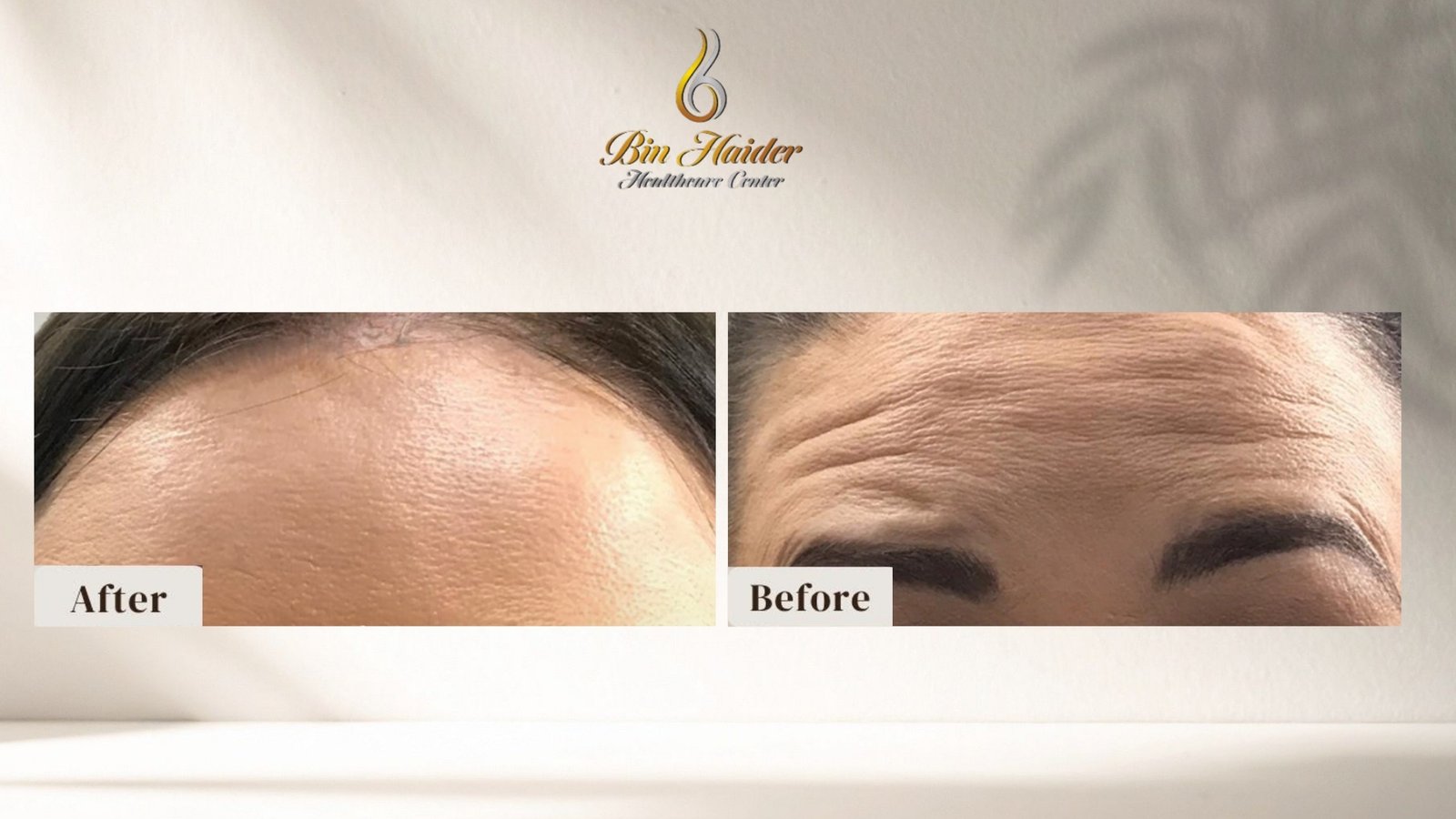
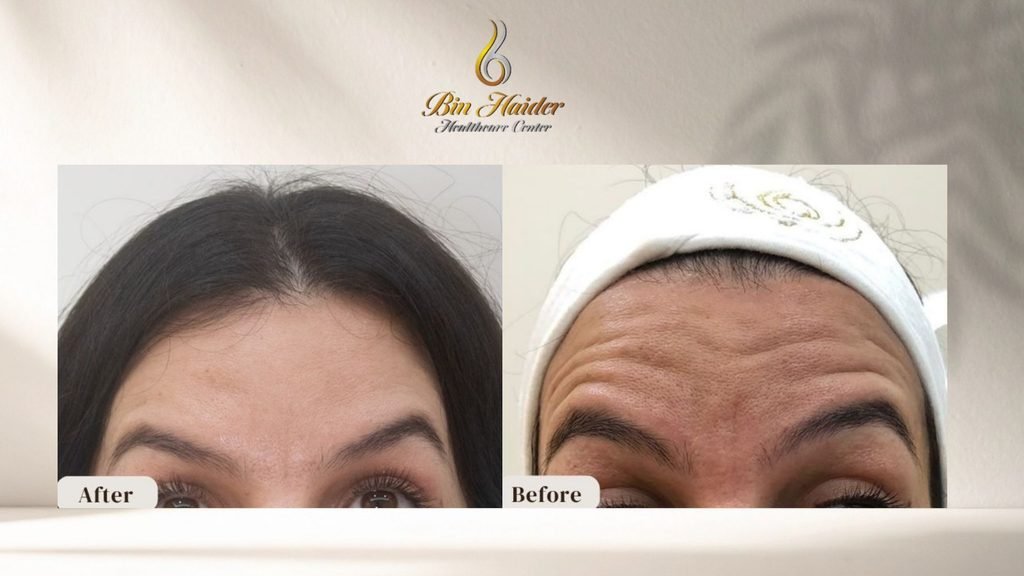
Results vary based on line depth, skin quality, and how long the lines have been present, but the general pattern holds: dynamic lines soften first, followed by gradual smoothing of finer surface lines over the following two weeks. Patients with early-stage lines, visible only during expression, typically see the most complete improvement, since their skin hasn’t yet developed the deep, permanent grooves that come from years of repeated movement.
Tip: Full results settle over about two weeks. Judging results in the first few days after treatment, before the effect has fully developed, often leads to unnecessary concern about the outcome.
Cost of Botox for Forehead Lines at BHHC
Cost is one of the first questions most patients ask, and understanding what actually drives the price helps set realistic expectations before comparing quotes.
Price Range by Unit/Area
Across licensed Dubai facilities, pricing for forehead Botox is typically calculated either per unit or as a flat rate for the treatment area, with the standard forehead dose requiring around 20 units.
What Affects Cost
Three factors typically drive the variation in price: the number of units required based on individual muscle strength, the experience level of the treating physician, and the facility’s overall standard of care, including equipment and safety protocols. A facility with higher clinical standards often reflects that in its pricing, which is a separate consideration from simply finding the lowest quote available.
Tip: Ask what’s included in the quoted price, such as the initial consultation and any follow-up touch-up policy, before comparing clinics on price alone.
Aftercare Tips for Forehead Botox
Following a few simple guidelines in the first 24 to 48 hours helps the treatment settle properly.
- Stay upright for at least 4 hours after treatment; avoid lying down or napping
- Avoid rubbing, pressing, or massaging the treated area for at least 24 hours
- Avoid strenuous exercise and heavy sweating for 24 hours
- Avoid saunas, facials, or steam rooms for 24 to 48 hours
- Avoid alcohol on the day of treatment to reduce bruising risk
Tip: Dubai’s intense, near year-round sun exposure accelerates collagen breakdown, which can affect how long results look their smoothest between sessions. Daily SPF won’t extend the treatment’s duration, but it helps protect the surrounding skin and supports smoother results overall.
Why Choose Bin Haider Healthcare Center in Dubai
Choosing a properly licensed, well-established facility matters for a treatment where technique and consistency directly affect the outcome.
Bin Haider Healthcare Center is a DHA-licensed dermatology and aesthetic facility located in Barsha Heights, Dubai, operating under the medical supervision of Dr. Hessa Bin Haider, a Board-Certified Dermatologist & Aesthetic Physician with over 20 years of experience. The clinic holds a 4.9/5 rating across 312 Google reviews.
What sets BHHC apart is its comprehensive, multi-specialty structure: dermatology, injectables, and aesthetic skin services are all available under one roof, allowing coordinated treatment plans rather than fragmented care across multiple providers. The facility operates under consistent, facility-wide clinical standards rather than relying on a single practitioner alone.
Ready to book your consultation?
[Book a Consultation] → Contact us via WhatsApp or call +971 4 770 0600 to schedule your assessment at our Barsha Heights facility.
FAQs
How long does Botox for forehead lines last?
Results typically last 3 to 4 months. Muscle activity gradually returns as the toxin wears off, and forehead lines slowly reappear with expression. Most patients schedule follow-up sessions every 3 to 4 months to maintain smooth results.
Is Botox for forehead lines painful?
Most patients describe the sensation as a brief pinch rather than significant pain. The procedure typically takes 10 to 15 minutes using a fine needle, and anesthesia usually isn’t necessary, though numbing cream is available for sensitive patients.
How soon will I see results?
Initial improvement is often visible within 3 to 7 days, with full effect settling in by around two weeks. Results continue to refine slightly during this window, so the final look is best judged at the two-week mark rather than immediately after treatment.
What’s the difference between Botox and fillers for forehead lines?
Botox relaxes the muscle movement that causes dynamic forehead lines. Fillers add volume to smooth deep, static lines that remain visible at rest. The two address different underlying causes and are sometimes combined for more complete results.
How much does Botox forehead Dubai treatment cost?
Pricing varies by clinic, physician experience, and facility standards, with the standard forehead dose requiring around 20 units. Costs are typically calculated per unit or as a flat rate for the treatment area, so it’s worth confirming exactly what’s included in any quoted price.
Is Botox for forehead lines safe?
Yes, when administered by a licensed physician at a DHA-regulated facility. Botox has a well-established safety profile and decades of clinical use, including a substantial evidence base specific to the forehead lines indication approved by the FDA in 2017.
References
- PR Newswire / AbbVie — FDA Approves BOTOX Cosmetic for Moderate to Severe Forehead Lines (2017)
- Pharmacy Times — FDA Approves New Indication of Botox for Moderate-to-Severe Forehead Lines
- AbbVie News — BOTOX Cosmetic Celebrates 20 Years Since First FDA Approval
- BOTOX Cosmetic HCP — Indications for Glabellar, Lateral Canthal, and Forehead Lines