
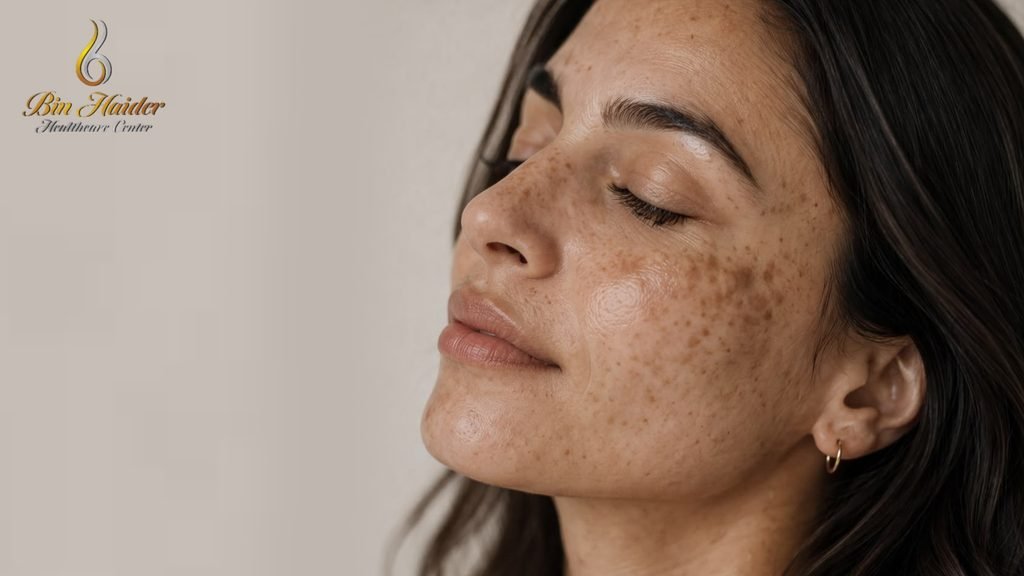
What Is Melasma and Why Is It So Common in the Gulf?
Medically reviewed by the clinical team at Bin Haider Healthcare Center (BHHC), a DHA-licensed dermatology and aesthetic facility in Barsha Heights, Dubai operating under Dr. Hessa Bin Haider’s medical supervision, with 20+ years of combined clinical experience and 4.9/5 across 312 Google reviews.
Melasma is one of the most common reasons patients across the Gulf region seek dermatology care, yet it’s frequently misunderstood as ordinary sun damage rather than the distinct, chronic condition it actually is. Understanding what is melasma means understanding both the underlying biology and why this specific condition affects the Gulf region at rates far above the global average. This guide offers melasma explained clearly, covering what it is, what triggers it, how it’s diagnosed, and what a properly equipped facility can offer for managing it long-term.
What Is Melasma, exactly?
At its core, what is melasma comes down to a specific type of chronic facial hyperpigmentation, and understanding what distinguishes it from ordinary sun spots is the first step toward managing it effectively.
Defining Melasma: A Chronic Condition, Not Simple Sun Damage
Melasma is a hyperpigmentation disorder characterized by symmetrical brown or grayish-brown patches, most often on the face. While UV exposure plays a major role, recent research increasingly describes melasma as a chronic inflammatory condition involving the skin’s microenvironment, not simply a matter of overactive pigment-producing cells. A 2025 review specifically characterized melasma as a disorder of epidermal-dermal crosstalk and immune modulation, reflecting a more complex underlying process than typical sun damage.
Where It Typically Appears
Melasma most commonly affects the malar region (cheekbones), forehead, and upper lip, areas with the highest cumulative sun exposure on the face. Patients often notice multiple affected areas simultaneously rather than a single isolated patch, which is one of the patterns that helps distinguish melasma from other causes of facial pigmentation.
Tip: Melasma is now understood to involve chronic inflammation in the skin, not just excess pigment production. This is part of why it can be more stubborn to treat than typical sun spots, and why a one-time treatment rarely resolves it permanently.
Melasma affects more than 5 million people in the United States alone, with reported prevalence ranging from roughly 1% in general populations to as high as 40% in some populations with higher UV exposure and darker skin phototypes. It is present in 15% to 50% of pregnant women worldwide.
Melasma Explained: Why It’s So Common in the Gulf Region
Here’s melasma explained in the context that matters most for patients in this region: why the Gulf sees such elevated rates of this specific condition.
UV Radiation as the Primary Driver
UV radiation is widely recognized as the most critical factor in melasma’s development and severity. The Gulf region experiences some of the highest UV levels globally, with near year-round sun exposure that significantly exceeds what most temperate-climate populations encounter. This UV radiation stimulates melanocytes, the skin’s pigment-producing cells, causing them to overproduce melanin in affected areas.
Heat as an Additional Factor
It isn’t only sunlight that contributes to melasma in this climate. High ambient temperatures, common throughout Gulf summers, can cause blood vessels in the skin to dilate, which can further trigger melanocyte activity beyond what UV exposure alone would cause. This combination of intense UV exposure and sustained heat is part of why melasma appears more frequently, and can be more resistant to treatment, in this region compared to more temperate climates.
Regional prevalence studies illustrate this clearly: melasma affects an estimated 2.9% of the general population in Saudi Arabia, rising substantially to 13.4% to 15.5% among Arab-American populations, and reaching as high as 16% to 39.5% in Iran and up to 37% in Morocco. These figures reflect how genetics, skin phototype, and intense regional UV exposure combine to drive melasma prevalence far above global averages in this part of the world.
What Triggers Melasma?
Several distinct factors can trigger or worsen melasma, and understanding all of them, not just sun exposure, is important for effective long-term management.
Hormonal Triggers
Pregnancy, oral contraceptives, and hormone replacement therapy are among the most frequently cited triggering factors for melasma, suggesting hormonal changes play a significant role in how the condition develops. This is part of why melasma is far more common in women than in men, and why it’s historically been called the “mask of pregnancy” when it appears during gestation.
Genetic Predisposition and Skin Phototype
Genetic factors influence individual susceptibility to melasma, and certain skin phototypes are disproportionately affected. Research consistently shows Fitzpatrick skin types III to V are most commonly represented among melasma patients, reflecting an interaction between genetic pigmentation tendencies and environmental UV exposure.
Visible Light and Inadequate Sunscreen
UV-B radiation isn’t the only light that stimulates melanocytes. Visible light, including light in the blue spectrum, has also been shown to trigger increased pigmentation that can persist for months. This means sunscreens formulated to block only UV-B and UV-A radiation may be insufficient for melasma patients specifically, since visible light exposure alone can still drive recurrence.
Tip: A sunscreen that doesn’t specifically block visible light, look for iron oxide listed in the formula, may not fully prevent melasma recurrence even with consistent daily use.
How Is Melasma Diagnosed?
An accurate diagnosis is the foundation of any effective melasma management plan, since several other skin conditions can resemble it on the surface.
Clinical Examination and Wood’s Lamp Assessment
Diagnosis typically begins with a clinical examination of the affected areas, often supported by a Wood’s lamp, a specialized UV light that helps assess how deep the pigmentation extends within the skin. This assessment helps guide which treatment approaches are likely to be most effective for a given patient’s specific presentation.
Why an Accurate Diagnosis Matters
Melasma can resemble other causes of facial hyperpigmentation, including post-inflammatory pigmentation or certain other skin conditions, each of which may require a different treatment approach entirely. Confirming melasma specifically, rather than assuming based on appearance alone, is what allows a treatment plan to actually address the underlying condition.
Tip: Self-treating suspected melasma with over-the-counter lightening products before a proper diagnosis can sometimes worsen pigmentation if the actual underlying cause turns out to be different from melasma.
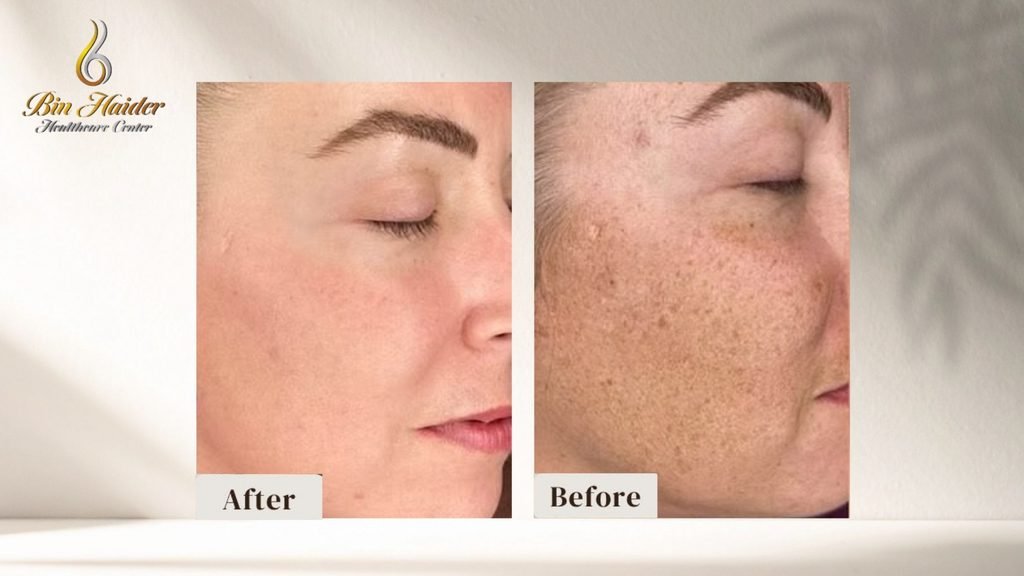
How Melasma Is Treated
Melasma management typically combines several approaches rather than relying on a single treatment, reflecting the condition’s chronic and multifactorial nature.
Topical Treatments
Topical treatments are typically a first-line approach, working to reduce pigment production and support even skin tone over time. The specific formulation used depends on the individual patient’s skin type and the depth of pigmentation identified during diagnosis.
In-Clinic Procedures
A range of in-clinic procedures can support melasma management as part of a broader treatment plan, tailored to each patient’s specific presentation and skin type. (For a detailed breakdown of specific melasma treatment options, see our dedicated treatment guide.)
Sun Protection: A Non-Negotiable Part of Any Plan
Given how central UV and visible light exposure are to melasma’s development, consistent sun protection is not optional; it’s a core part of any treatment plan, regardless of which other treatments are used alongside it.
Tip: Melasma is a manageable, chronic condition rather than a one-time fix. Treatment plans are typically ongoing, with maintenance strategies needed to prevent recurrence, particularly in a high-UV climate like the Gulf region.
Our Facility & Diagnostic Standards
Where a patient receives a melasma diagnosis and treatment plan matters, since accurate diagnosis and appropriate technology directly affect outcomes.
DHA Facility Licensing
DHA (Dubai Health Authority) facility licensing sets requirements for diagnostic equipment standards and staff credentialing across the entire clinical team, not just the individual physician a patient happens to see. A properly licensed facility maintains consistent diagnostic and treatment protocols across the board.
A Coordinated Clinical Team
At BHHC, dermatology and skin-quality services are delivered by a clinical team operating under Dr. Hessa Bin Haider’s medical supervision and shared, facility-wide protocols. This structure supports consistent diagnostic standards and allows coordinated care across dermatology and aesthetic skin services within a single facility.
Tip: Ask any Dubai facility whether they use a Wood’s lamp or other diagnostic tools to confirm melasma before recommending treatment, rather than treating based on visual appearance alone.
Melasma Treatment in Dubai
Understanding the condition is one part of the picture; knowing what to look for in a Dubai facility for melasma specifically is the practical next step.
Why a DHA-Licensed, Diagnostic-First Facility Matters
Melasma treatment in Dubai should start with a DHA-licensed facility that treats diagnosis as a distinct, essential first step rather than skipping straight to treatment recommendations. Because melasma can resemble other pigmentation conditions, and because the region’s climate makes ongoing management particularly important, a diagnostic-first approach protects patients from treatments that don’t actually address their specific condition.
What to Expect at a First Consultation
A first consultation typically includes a clinical skin assessment, discussion of potential triggers relevant to the individual patient (hormonal history, sun exposure patterns, skincare products used), and the development of an initial management plan built around the confirmed diagnosis.
Tip: Given how common melasma is in this region, a facility with genuine regional experience treating a wide range of skin phototypes is a meaningful advantage over a provider with limited exposure to this specific patient population.
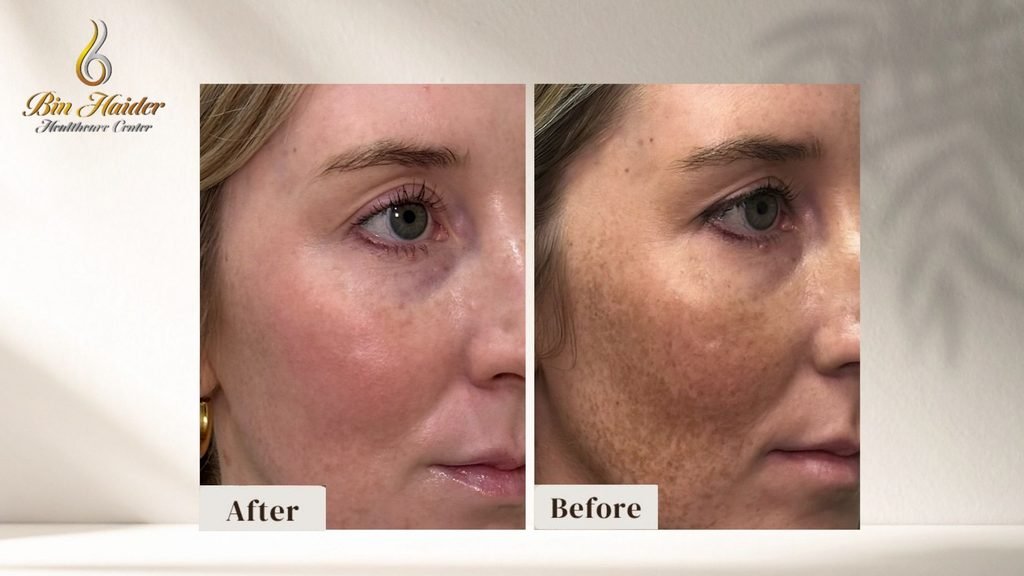
Why Choose Bin Haider Healthcare Center in Dubai
Choosing a properly licensed, diagnostic-first facility matters for a condition as commonly mismanaged as melasma.
Bin Haider Healthcare Center is a DHA-licensed dermatology and aesthetic facility located in Barsha Heights, Dubai, operating under the medical supervision of Dr. Hessa Bin Haider, a Board-Certified Dermatologist & Aesthetic Physician with over 20 years of experience. The clinic holds a 4.9/5 rating across 312 Google reviews.
What sets BHHC apart is its comprehensive dermatology services under one roof, combined with a diagnostic-first approach to conditions like melasma. Rather than treating based on appearance alone, the clinical team confirms the underlying diagnosis before building a management plan, operating under consistent, facility-wide clinical standards.
Ready to book your consultation?
[Book a Consultation] → Contact us via WhatsApp or call +971 4 770 0600 to schedule your assessment at our Barsha Heights facility.
FAQs
What is melasma in simple terms?
Melasma is a chronic skin condition causing symmetrical brown or grayish-brown patches, most often on the cheeks, forehead, and upper lip. It’s driven by a combination of UV and visible light exposure, hormonal factors, and genetic predisposition, and is far more common in women than men.
Is melasma the same as sun spots?
No. While UV exposure contributes to both, melasma is now understood as a chronic inflammatory condition involving the skin’s deeper layers, not just localized sun damage. This is part of why melasma often requires ongoing management, while typical sun spots may respond more straightforwardly to a single treatment.
Can melasma be cured completely?
Melasma is generally considered a manageable, chronic condition rather than one with a permanent one-time cure. With consistent treatment and strict sun protection, pigmentation can be significantly reduced and controlled, but ongoing maintenance is typically needed to prevent recurrence, especially in high-UV climates.
Why do so many women in the Gulf region get melasma?
The Gulf’s near year-round intense UV exposure, combined with high ambient heat that can further trigger melanocyte activity, creates conditions that significantly increase melasma risk. Regional studies report prevalence rates well above global averages, reflecting this combination of climate and genetic factors.
Where can I get melasma treatment in Dubai?
Melasma treatment in Dubai should start with a DHA-licensed facility that confirms the diagnosis, often using tools like a Wood’s lamp, before recommending a treatment plan. This diagnostic-first approach ensures the treatment actually addresses melasma rather than a different pigmentation condition.
Does melasma go away after pregnancy?
Sometimes, but not always. Pregnancy-related melasma can fade partially after hormone levels stabilize post-delivery, but it frequently persists to some degree, particularly with continued sun exposure. A proper evaluation after pregnancy can determine whether further treatment is needed.